The First 48 Hours After Storm Damage
What you do immediately affects what your policy will pay.
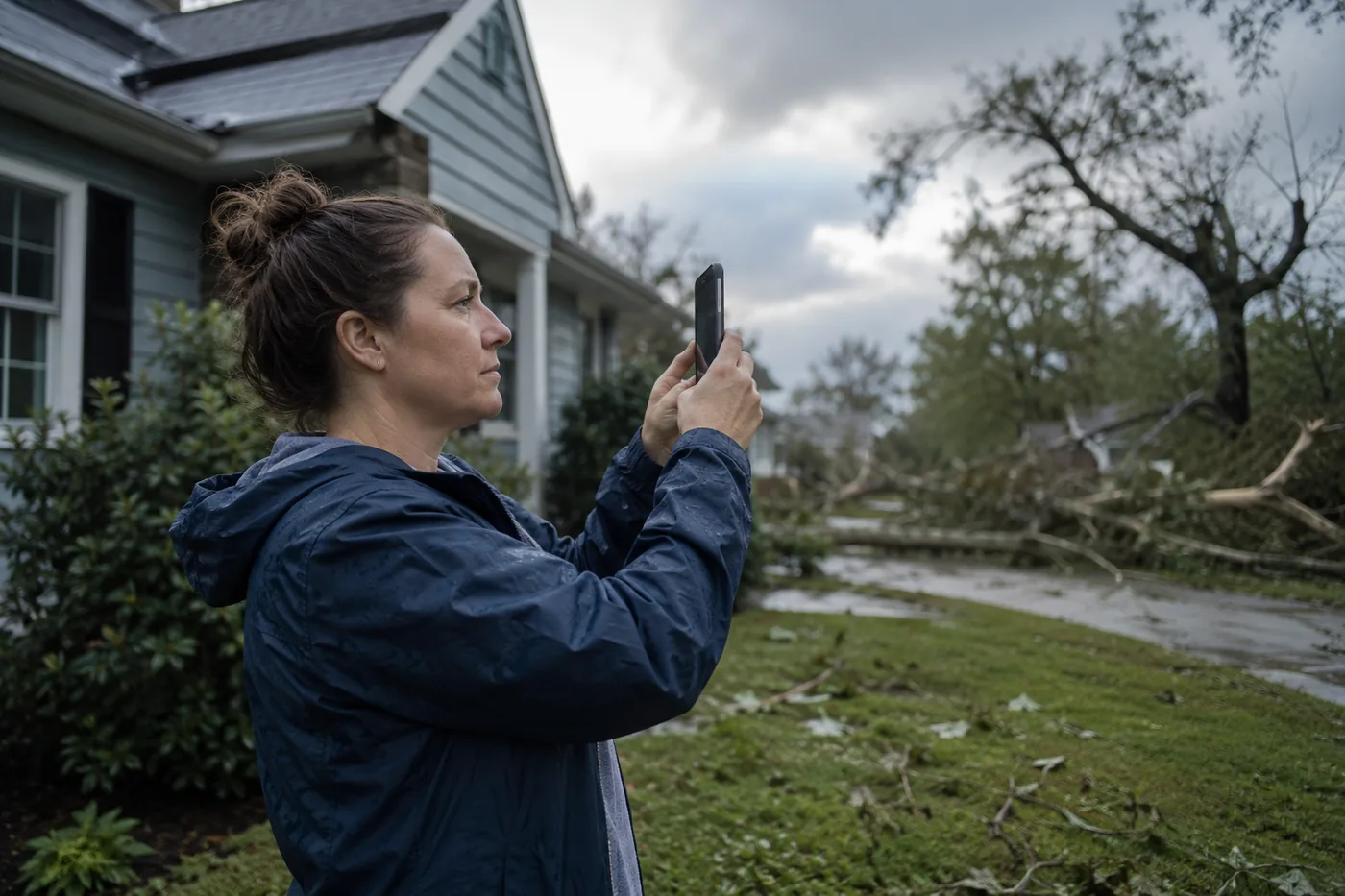
After a storm, the order you do things in matters. Policies require you to limit further damage and to report promptly, and both obligations start straight away.
Safety first, and it is not a formality
Stay clear of downed power lines, standing water near electrical equipment, and any part of a structure that looks unstable. If you smell gas or suspect a leak, leave and call the utility from somewhere else. No insurance question is worth answering before this one.
Photograph before you touch anything
Take more images than feels necessary: wide shots showing the whole room or elevation, then close-ups of specific damage. Include the exterior, the roof from ground level, and any water line on walls. Video walking through the property is useful because it captures context a still photo misses.
Do this before you move anything. An adjuster assessing the claim later is working from what you recorded.
Make temporary repairs, and keep the receipts
Most policies require you to prevent further damage. That means tarping a roof, boarding a broken window, shutting off the water supply, or moving undamaged contents somewhere dry. Reasonable emergency repair costs are generally reimbursable, so keep every receipt.
Do not make permanent repairs before the adjuster has inspected. Temporary is the operative word.
Report the claim
Call your insurer or use their app. Have your policy number, the date the damage occurred, and a short factual description ready. Write down the claim number and the name of whoever you spoke to.
Report even if you are unsure whether you will claim. Prompt notice is a policy condition, and you can decide later whether to proceed.
Keep a log
From this point, record every call: date, time, who you spoke to and what was agreed. Claims involving multiple contractors and adjusters get confusing quickly, and a log resolves disagreements that memory will not.
Before signing anything
Contractors appear quickly after major storms. Do not sign an agreement assigning your insurance benefits to a contractor without understanding what you are giving up, and be wary of anyone asking for a large payment up front or pressing for an immediate decision.
FEMA publishes guidance on documenting damage and dealing with contractors after a declared disaster at fema.gov.
This article is general information about how consumer finance products work in the United States. It is not financial, tax or legal advice and is not a recommendation of any specific product or provider. Rules and pricing vary by state and by institution.